
english below…
1. EDM là gì?
EDM (External Device Monitoring) là một chức năng giám sát tín hiệu phản hồi từ thiết bị ngoại vi an toàn, như contactor, relay, hoặc bộ chấp hành trong các hệ thống máy móc tự động hoặc xe tự hành (AGV). Mục đích chính của EDM là xác nhận rằng thiết bị đã thực sự chuyển sang trạng thái an toàn sau khi có lệnh từ hệ thống.
2. Vai trò của EDM trong hệ thống an toàn
Khi cảm biến phát hiện người xâm nhập vùng nguy hiểm, nó sẽ ngắt tín hiệu OSSD (Output Signal Switching Device), yêu cầu dừng thiết bị. Tuy nhiên, để đảm bảo thiết bị thực sự đã dừng, cần kiểm tra tín hiệu phản hồi từ thiết bị ngoại vi thông qua EDM.
Nếu hệ thống không nhận được phản hồi đúng từ EDM trong thời gian cho phép, nó sẽ báo lỗi và giữ thiết bị trong trạng thái dừng, đảm bảo an toàn tuyệt đối.
3. Logic hoạt động của tín hiệu EDM
Tín hiệu EDM phải luôn ngược với tín hiệu OSSD:
| Trạng thái OSSD | Trạng thái EDM (bình thường) |
|---|---|
| ON (máy hoạt động) | OFF (contactor đang đóng) |
| OFF (máy dừng khẩn) | ON (contactor đã mở) |
Nếu EDM không phản ánh đúng trạng thái như trên trong thời gian cho phép, hệ thống hiểu là có lỗi xảy ra: ví dụ contactor bị dính, tiếp điểm không tách được, gây nguy hiểm cho người vận hành.
4. Cấu hình thời gian trễ (Delay)
EDM có 2 loại thời gian trễ cấu hình được:
- OFF Delay: Là khoảng thời gian cho phép để contactor ngắt sau khi OSSD chuyển sang OFF.
→ Giúp hệ thống không báo lỗi sai khi thiết bị chưa kịp dừng. - ON Delay: Là khoảng thời gian cho phép để thiết bị ổn định sau khi OSSD bật trở lại.
→ Giúp loại bỏ nhiễu hoặc dao động tín hiệu.
Cả hai khoảng trễ này giúp hệ thống hoạt động ổn định, không báo lỗi giả, và đảm bảo an toàn thực sự.
5. Ví dụ minh họa
Hình dưới đây mô tả quan hệ thời gian giữa OSSD và EDM:
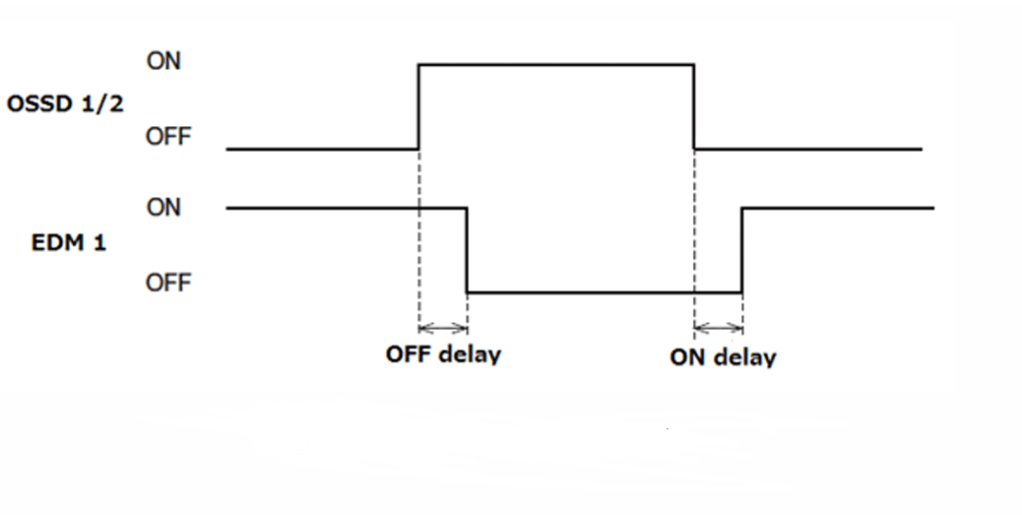
EDM sẽ phản hồi chậm một chút sau khi OSSD thay đổi trạng thái – chính là các khoảng trễ được thiết lập bởi người dùng.
6. Lợi ích khi sử dụng EDM
- Phát hiện contactor dính tiếp điểm (một lỗi nguy hiểm).
- Đảm bảo thiết bị đã thực sự dừng trước khi cho phép khởi động lại.
- Tránh lỗi giả do tiếp điểm dao động hoặc nhiễu tín hiệu.
- Tăng độ tin cậy và an toàn cho toàn bộ hệ thống.
7. Ứng dụng thực tế
EDM được sử dụng rộng rãi trong:
- Dây chuyền sản xuất có robot công nghiệp.
- Xe tự hành AGV sử dụng laser scanner như UAM.
- Hệ thống máy ép, máy gia công CNC có vùng nguy hiểm.
- Các trạm điều khiển cần xác minh dừng khẩn chính xác.
Tóm Lại
EDM là một mắt xích quan trọng trong hệ thống an toàn, đảm bảo rằng thiết bị đã thực sự phản hồi đúng với tín hiệu điều khiển. Việc hiểu và cấu hình đúng EDM sẽ giúp doanh nghiệp nâng cao mức độ an toàn, tránh tai nạn, và duy trì hoạt động ổn định trong môi trường sản xuất hiện đại.
1. What is EDM?
EDM (External Device Monitoring) is a function that monitors feedback signals from external safety devices, such as contactors, relays, or actuators in automated machinery systems or Automated Guided Vehicles (AGVs). The main purpose of EDM is to confirm that the device has actually transitioned to a safe state after receiving a stop command from the system.
2. The Role of EDM in a Safety System
When a sensor detects a person entering a hazardous area, it deactivates the OSSD (Output Signal Switching Device), instructing the machine to stop. However, to ensure the machine has truly stopped, the system must check the feedback signal from the external device via EDM.
If the system does not receive the correct EDM feedback within the allowed time, it will generate an error and maintain the stop state, ensuring absolute safety.
3. Operating Logic of the EDM Signal
The EDM signal must always be inverted with respect to the OSSD signal:
| OSSD State | EDM State (Normal) |
|---|---|
| ON (Machine running) | OFF (Contactor is closed) |
| OFF (Emergency stop) | ON (Contactor is open) |
If the EDM signal does not reflect the correct state within the permitted time, the system considers it a fault—e.g., the contactor is stuck, or the contacts fail to open—posing a risk to the operator.
4. Configurable Delay Times
EDM allows configuration of two types of delay:
- OFF Delay: The time allowed for the contactor to open after the OSSD turns OFF.
→ Prevents false errors when the device takes time to stop. - ON Delay: The time allowed for the system to stabilize after the OSSD turns back ON.
→ Helps eliminate noise or signal fluctuation.
These delays ensure smooth system operation, prevent false alarms, and ensure genuine safety.
5. Illustration Example
The diagram below shows the timing relationship between OSSD and EDM:
EDM responds slightly later than the OSSD state change—these are the delay periods configured by the user.
6. Benefits of Using EDM
- Detects contactor sticking (a critical safety fault).
- Confirms the device has stopped before allowing restart.
- Prevents false errors caused by contact bounce or electrical noise.
- Increases overall system safety and reliability.
7. Real-World Applications
EDM is widely used in:
- Industrial production lines with robots.
- AGVs using laser scanners such as the UAM.
- Press machines and CNC equipment with hazardous zones.
- Control stations requiring precise emergency stop confirmation.
Summary
EDM is a vital link in the safety system, ensuring that equipment correctly responds to control signals. Understanding and configuring EDM properly helps companies enhance safety, prevent accidents, and maintain stable operations in modern production environments.
 Automation and Industrial Networks